
The Future of Education in Hawaii
As we seek to recover, rebuild and renew our commitment to education, our students deserve MORE than a return to normal, they deserve to… Believe in Better. Here are our five promises to America’s students and families:

Our journey
Our voices

Our guiding stars
Our vision

A student’s educational journey

Measures of success
Ka Ho‘ona‘auao ma Hawai‘i i ka wā ma hope
OUR voyage
Kā kākou huaka‘i
Situated between the global hubs of New York City and Washington, D.C., you will find The First State, with an impact and intrigue that belie its small size. Beyond its pristine beaches, abundant historic landmarks and industrious rivers, Delaware is home to even more remarkable features: initiative and innovation that have shaped the nation and beyond, and a public school system that provides a model for what is possible. The system’s historic challenges have been met with an even stronger push for excellence. Together, let’s embark on a journey into the future of education in Delaware, traveling a path to discover how we can ensure all our students fulfill their potential.
Our journey begins with a look back at efforts made across the state that led us to where we stand today. Over the past several years, Delaware has taken key steps toward great schools:
➊ Our students have made some of the greatest learning improvements in the country.1
Our vision for education has set the bar high for our students, and we know that each child has the potential to reach it. Yet these ambitious goals won’t be possible if we continue to use learning models that are stuck in the past. Together we will need to chart a new path forward into the future.
1. Hawai‘i State Department of Education, “Hawai‘i’s scores on 2015 ‘Nation’s Report Card’ follow national drop”, October 27, 2015.↩
2. Hawai‘i State Department of Education, Strategic Plan 2017–2020, pp. 4, December, 16, 2016.↩
3. Hawai‘i State Department of Education, “Strive HI Results”, SY2015-16 and SY2012–13.↩
4. Hawai‘i Data eXchange Partnership, Dashboards—College & Career Readiness Indicators (CCRI), “College Enrollment, Nationwide (by Grad Class)”.↩
5 Hawai‘i State Department of Education, Strategic Plan 2017–2020, pp. 4, December, 16, 2016.↩
Our voices
KO mākou leo
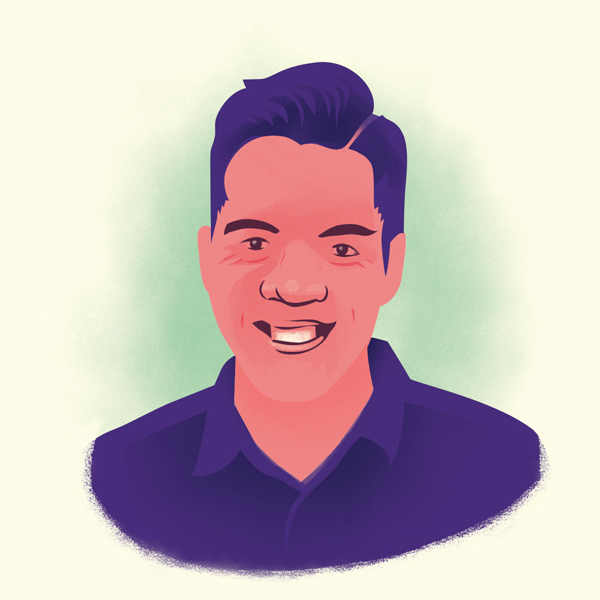
Mathieu Williams
“As an educator, I am empowered to ensure that all of my students receive the care and commitment needed to achieve greatness despite their circumstances. It is when I actively choose to elevate all of my students and celebrate the value that they hold within our world, I am able to create relationships that truly are the heart of all learning. Our education system must provide the resources and tools to help unlock the potential of all kids.”
Mathieu Williams is a digital media teacher at Kealakehe Intermediate School, where he strives to empower his students to lead from every chair, work from the heart and challenge their limits. He also serves as a statewide engager for Hope Street Group, a group striving to elevate teacher voice across Hawaii so they can inform policies and initiatives that lead to student success.

Kelela Moo
“As a Pacific Islander, I know the power of looking at the past—at our ancestors—to find truth, knowledge and power. When culture is mixed with technology, a unique perspective is created, new technology is produced and more problems can be solved. I want to teach computer science so that I can create opportunities for learning for everyone who wants to learn. We need an education system in Hawaii that provides opportunities for students to experience innovation in terms of the past, present and future.”
Kelela Moo is from Lāie Hawaii, with ancestors hailing from Tonga, Tahiti, Hawaii and China. She is a graduate of Kamehameha Schools and is currently attending Brigham Young University-Hawaii where she is majoring in computer science and minoring in education. She has been an intern at the local nonprofit Purple Maia for two years, teaching web development to middle schoolers.

Patricia Espiritu Halagao
“Multilingualism is important for our students because it honors student voices and is the best academic approach for success in school. I advocated for the Seal of Biliteracy while on the Hawaii State Board of Education to help our system better recognize the incredible value and transformational power of learning languages. The rich cultural and linguistic diversity of Hawaii is an asset that can help our students graduate more prepared for college, career and contributions to our community.”
Dr. Patricia Espiritu Halagao is a professor at the University of Hawaii at Mānoa and chair of the Department of Curriculum Studies. She served on the Hawaii State Board of Education from 2013 to 2016, where she championed equity, cultural diversity and multilingualism. She received a doctorate in education from the University of Wash-ington and was an elementary teacher.

Erin Medeiros
“Options come in many forms: location, programming, educational philosophy, context, relevance, size. In Hawaii, charter schools that emphasize place and culture can dramatically impact students, families, communities and the messages we send about who and what we value. As parents, we love that our daughter can attend a public charter school with an unwavering vision: a sense of belonging, responsibility, excellence, wellness and a belief that Hawaiian culture is a living, breathing being.”
Erin Medeiros and her husband Jonathon have spent the past 12 years working with students at Kauai High School. She currently teaches the school’s 12th-grade AP English Literature & Composition classes and runs the peer mediation program. She is a Hope Street Group Hawaii state fellow and has she has served on the board of the YWCA of Kauai for the past five years.
Our guiding stars
Ko kākou mau Hōkū ALAKAʻI

For decades, Delaware scientists have reached for the stars and played a role in American space exploration. Grounded in that same sense of what’s possible, we will use these four guiding stars to set goals for the future of education in Delaware.
Innovation
To reach this destination, we will reimagine high school as an on-ramp to the wider world. We will create pathways to new careers by promoting different types of learning. We will provide internships where our students can use their creativity and curiosity to solve the big sustainability challenges that threaten our local way of life.
Options
To reach this destination, we will ensure that diverse options are available to all students. Through investments in transportation and school guides, we will help all families find the right learning environment for their children. The result will be engaged citizens who are ready to lead in their neighborhood, the state, the country and the world.
Multilingualism
To reach this destination, we will make multilingualism a foundational element inside every classroom. We will invest in world language immersion programs and a strong focus on writing and speaking in the classroom. We will combine world language skills with the cultural competence to give our students the edge as the leaders of tomorrow.
Excellence
through all our educational endeavors.
To reach this destination, we will embrace rigorous standards in all our subjects. We will reimagine assessments to better serve students and teachers. We will celebrate and elevate educators as the individuals and professionals they are. We will empower parents and families to serve as advocates for their children and hold us all to these ambitious goals.
Our vision
Kā kākou NUʻUKIA
From Princess Bernice Pauahi Bishop, St. Marianne Cope and Duke Kahanamoku to Senator Daniel K. Inouye, Congresswoman Patsy T. Mink and President Barack Obama to Janet Mock, Domingo Los Banos and Tai Heong Kong Li, we know there are no limits to the local and global impact students from Hawaii can have throughout their lives.
Providing these opportunities for all kids means navigating through our own unique strengths, challenges and opportunities. We are the first “minority-majority” state in the country. We are also the only state with a constitution that recognizes two official languages. Our location makes us a gateway to the Pacific and the world. And as an island state, we know that protecting our environment and acting sustainably is crucial for all of us to thrive.
We are charting the path to a future where:
A student’s educational journey
Ke ala HOʻONAʻAUAO o ka haumana
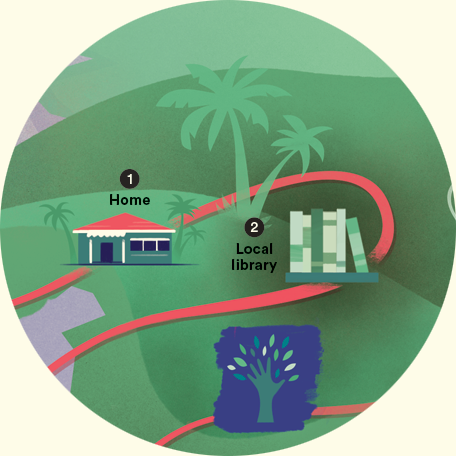
Home
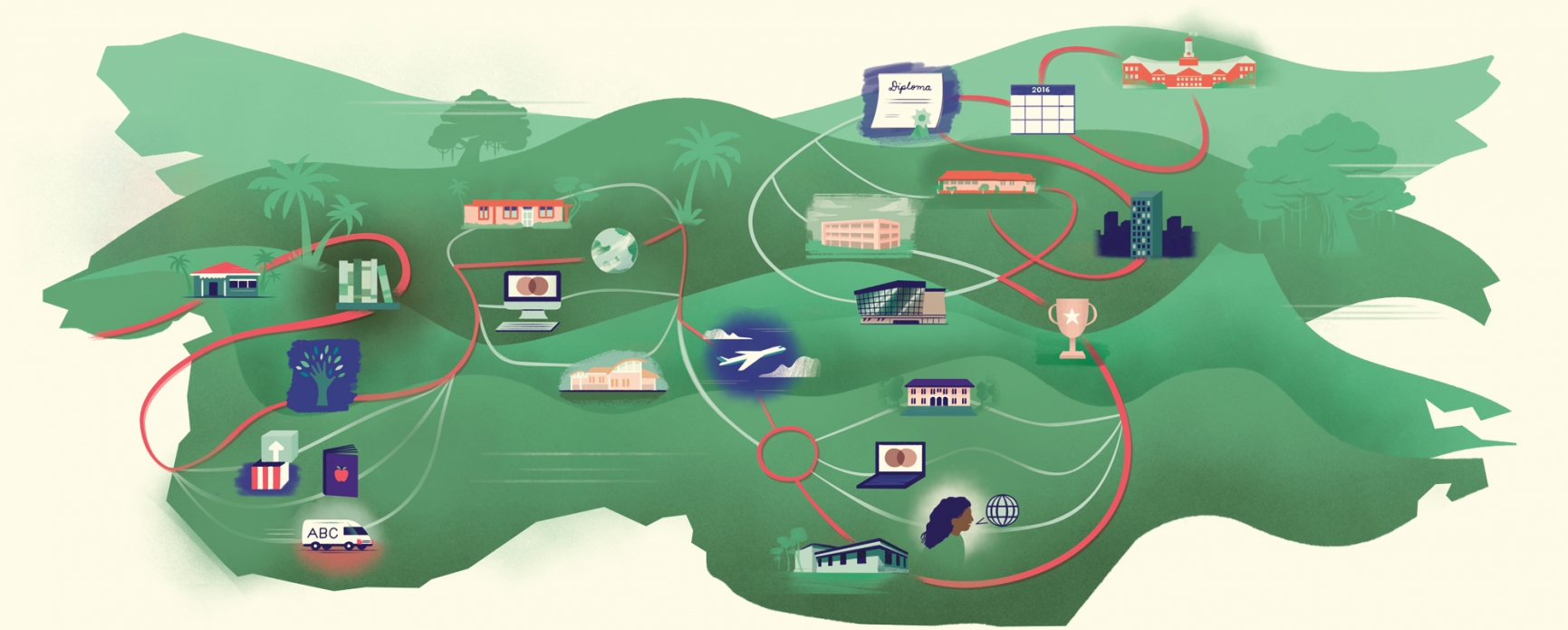
Azadia is born into a family of modest means in Ewa Beach, Hawaii.
Local library
Azadia’s family joins a local library program that helps them create a stimulating language environment at home.
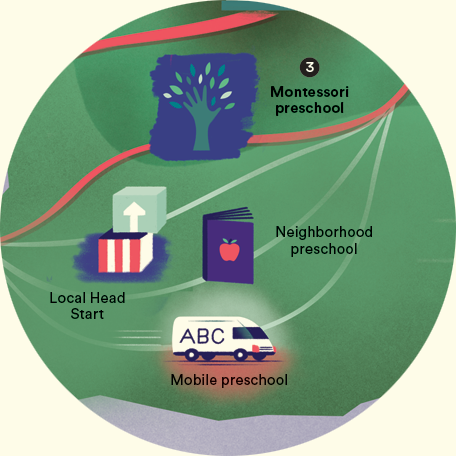
Montessori preschool
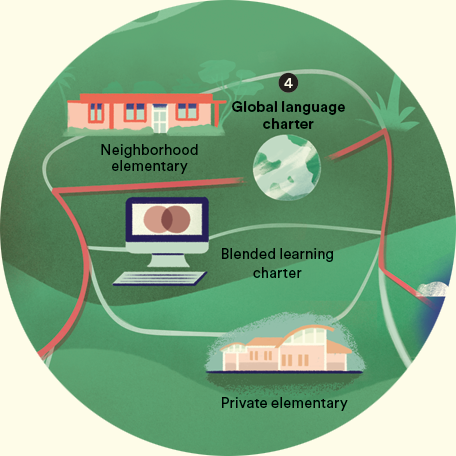
Global language charter
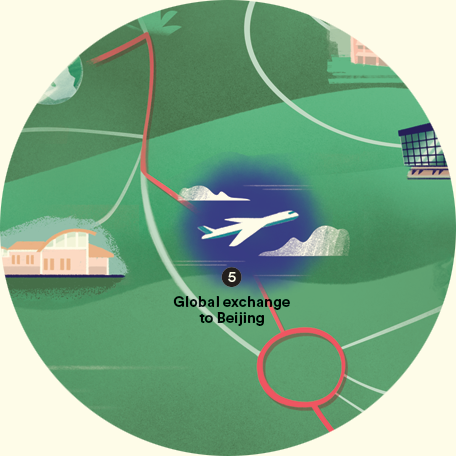
Global exchange to Beijing
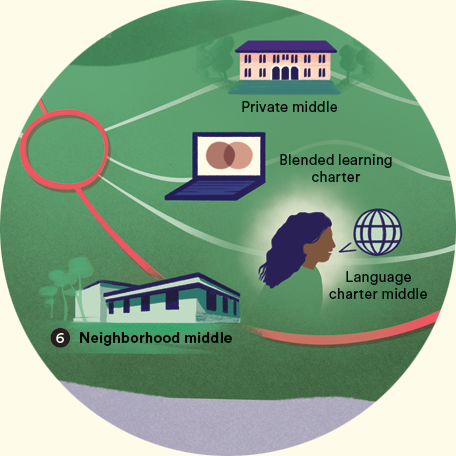
Neighborhood middle
Azadia enrolls in her neighborhood public middle school for the strong project-based learning program and to be closer to her friends.
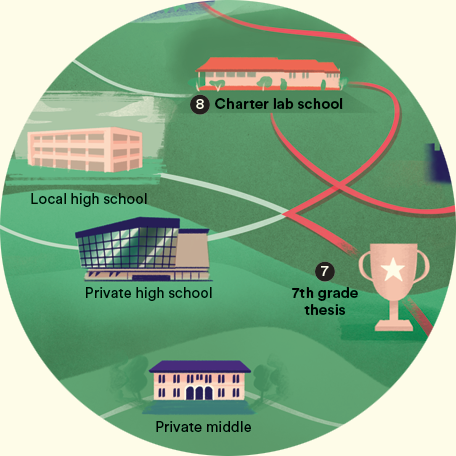
7th grade thesis
Azadia visits with scientists at the National Oceanic and Atmospheric Administration (NOAA) as part of a series of field trips to support her project on combatting global warming. Her thesis wins a science competition.
Charter lab school
For high school, Azadia chooses a charter lab school housed on a college campus that uses a blended learning model. She is on campus three days a week, interns one day a week and does advanced computer science work online once a week.
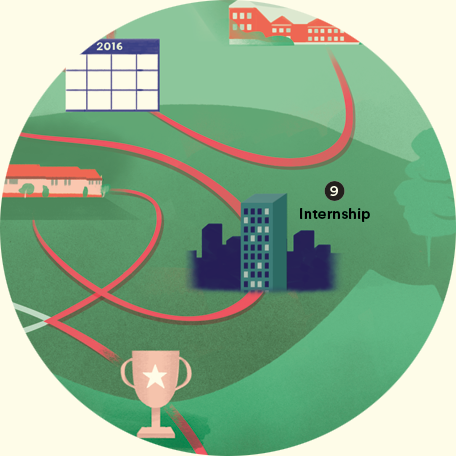
Internship
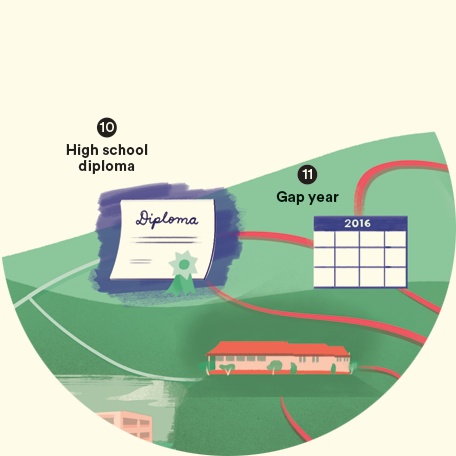
High school diploma
Gap year
Azadia is accepted into a prestigious mainland college but defers for a year to work for a local renewable energy lab.
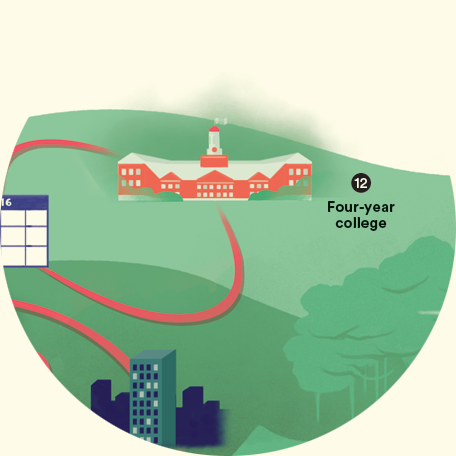
Four-year college
Measures of success
Nā ana o ka lanakila
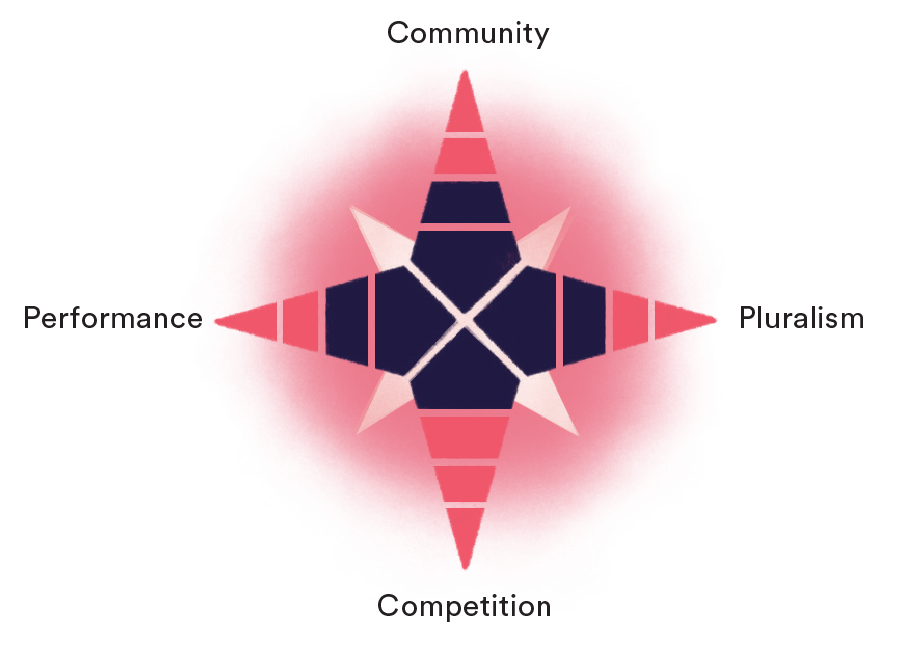
Community → Effective, sustainable policy change requires strong relationships, real-time feedback and long-term ownership by the people served.
Competition → Greater responsiveness and better outcomes are more likely when people have the power to choose among multiple options to meet their needs.
Performance → Success requires both the flexibility to pursue excellence and rigorous standards to ensure those serving the public are held accountable for their results.
Pluralism → Diverse populations are better served by dynamic systems that support lots of paths to success and embrace different traditions, values and beliefs.
Below you’ll see how we currently rate ourselves in each dimension. These ratings use 50CAN’s four-point scale. We also outline next steps for our future progress.
Community
(2 points out of 4)
We have committed to building strong relationships between our schools and their communities. The next step is to ensure all communities have true ownership over their educational experiences. That means elevating community voices and making sure they are heard.
Competition
(1 point out of 4)
While a large number of students already attend alternatives to traditional schools, many students still don’t have access to these options. We will need to bring many more diverse school providers and civic groups into the public sphere to provide all families with a range of high-quality choices.
Performance
(2 point out of 4)
We have invested as a state in more rigorous standards, assessments and systems for holding schools and teachers accountable for results. We need to keep improving these approaches by also empowering leaders with the support needed to reach their goals.
Pluralism
(2 points out of 4)
We have made important steps toward embracing diversity and difference in our approach to education. We will need to strengthen our unique cultural and linguistic position by making greater investments in civic and educational programs that build upon these values.
How to get involved
Pehea e komo ai i ka hana
Founded in 2017, HawaiiKidsCAN is a nonprofit organization committed to ensuring that Hawaii has an excellent and equitable education system that reflects the true voices of our communities and, in turn, has a transformational impact on our children and our state. HawaiiKidsCAN is a branch of 50CAN: The 50-State Campaign for Achievement Now.
Guided by our shared dream of helping all kids get a great education, we aim to mobilize students, parents and community members to advocate for high-quality education policies and serve as a platform for citizen advocates across Hawaii to get involved. Here’s how you can join in:
→ Want to learn more about education in Hawaii? Continue your journey by exploring our site and sign up for our emails to stay in the know.
→ Share your ideas. How can Hawaii aim high in education? Share a post on social media with the hashtag #KidsCAN.
→ Start the conversation. We would love to hear from you and talk more about how we can work together. Email us at partnerships@hawaiikidscan.org.
Together, we can build an education system worthy of the immense potential of all our children.